Join us at one of our monthly deep dive Roundtable/Working Sessions at 12:00 pm ET, 11:00 am CT, 10:00 am MT, and 9:00 am PT.
We believe that your organization's greatest hidden potential is human!
Roundtable/Working Sessions Schedule
We are facilitating a series of Peer Roundtable/Working Sessions for senior HR, Talent and Learning Leaders facing challenges with upskilling, reskilling, and rightskilling. Join us at one of our upcoming sessions and work with cross-industry peers to solve these challenges and unlock the hidden human potential in your organization.
Join us at one of our deep dive Roundtable/Working Sessions every second Wednesday of the month at 12:00 pm ET, 11:00 am CT, 10:00 am MT, and 9:00 am PT
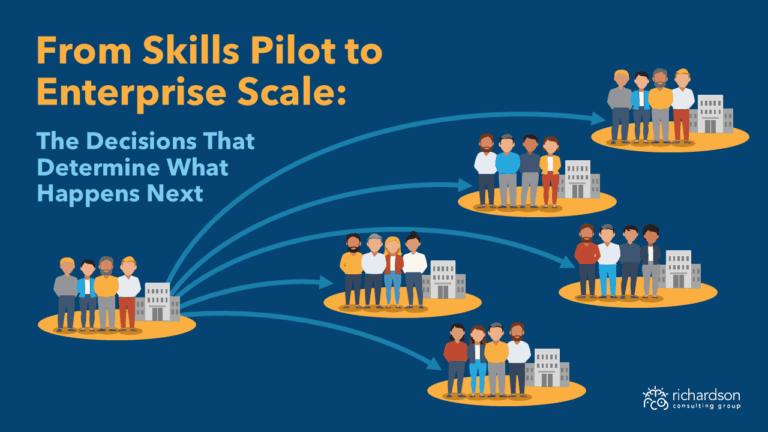
From Skills Pilot to Enterprise Scale: The Decisions That Determine What Happens Next
November 11, 2026
Launching a skills pilot is relatively easy. Scaling it across an enterprise is where the real complexity begins.
As organizations move beyond isolated experiments, they face a new set of questions:
Which use cases are worth scaling?
Is the underlying skills data trustworthy enough to support workforce decisions?
Who owns the skills architecture, governance, and data quality?
How should skills connect across talent acquisition, learning, mobility, workforce planning, and talent technology?
What should be standardized—and where should the business retain flexibility?
This is a discussion-driven session for practitioners actively designing, piloting, or scaling skills-based talent practices—not a presentation or vendor demonstration.
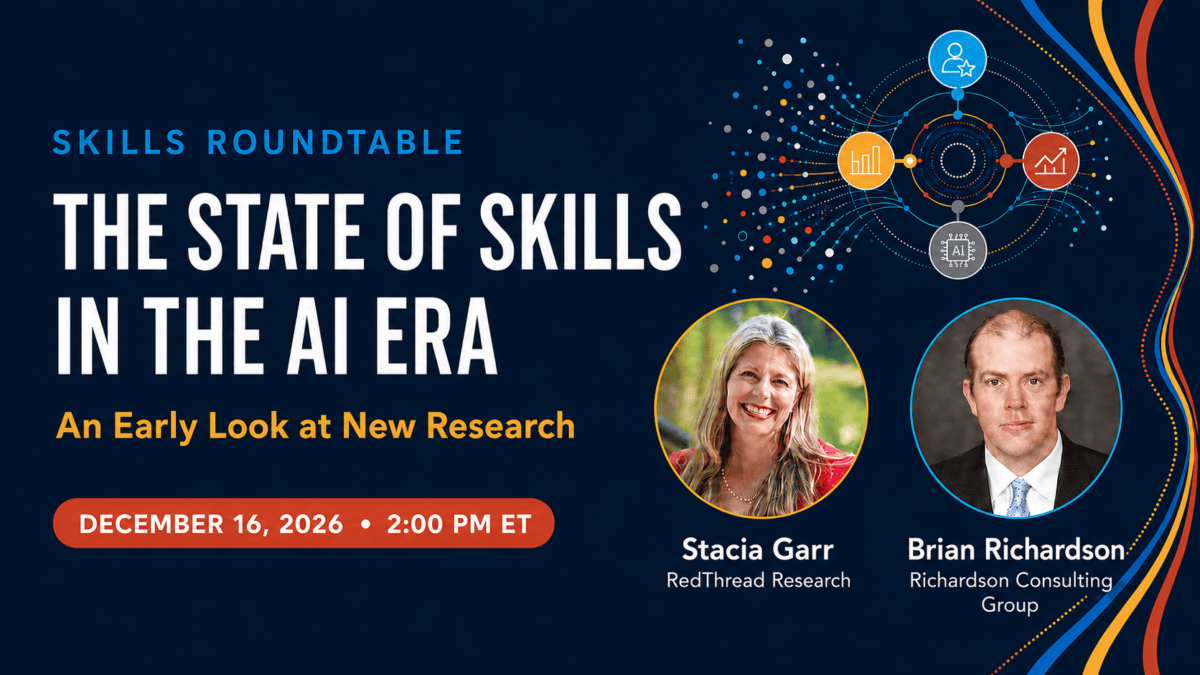
The State of Skills in the AI Era: An Early Look at New Research
December 16, 2026
Join us for an early look at RedThread Research’s latest study on skills maturity in the AI era.
RedThread researchers will share emerging findings on how organizations are approaching skills, how their efforts are evolving, and what outcomes they are achieving. Together, we’ll explore where organizations are making progress, what distinguishes more mature approaches, where skills initiatives continue to stall, and how AI is changing the requirements for enterprise skills strategies.
This will be an interactive, peer-level roundtable—not a traditional webinar. Participants will be invited to react to the findings, compare them with their own experiences, and discuss the implications for skills strategy, data, technology, governance, talent practices, and workforce planning.
Designed for senior HR, Talent, Learning, Workforce Planning, HR Technology, and skills leaders.
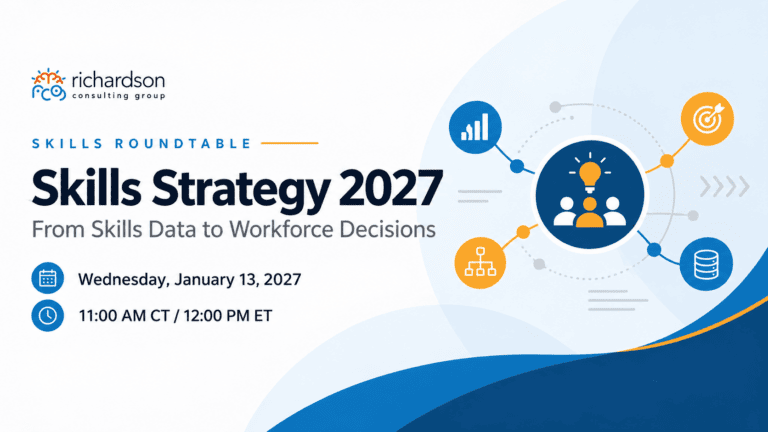
Skills Strategy 2027: From Skills Data to Workforce Decisions
January 13, 2027
Organizations have invested heavily in skills taxonomies, data, marketplaces, and technology. Now a harder question is emerging: what workforce decisions are these investments supposed to improve?
As AI reshapes work, leaders need to turn skills data into better decisions about talent, capability, and investment.
We’ll explore:
Which workforce decisions skills data should actually support
How much data confidence different decisions require
How AI-inferred skills fit alongside assessments and manager input
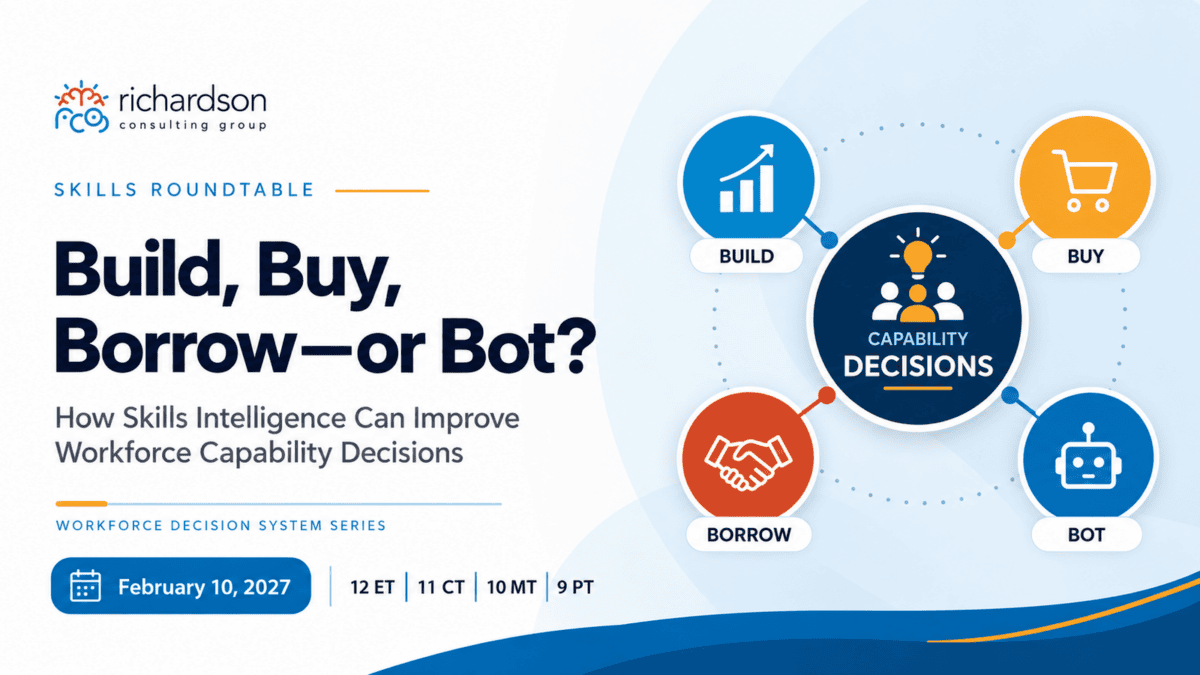
When to build, buy, borrow, redeploy, or automate capability
If your organization has moved beyond asking “Should we become more skills-based?” and is now asking “How should skills actually improve the decisions we make about our workforce?”, this conversation is for you.
Most organizations have invested heavily in understanding workforce skills and identifying capability gaps. But once a critical gap is clear, what happens next? Should you hire, develop existing talent, redeploy people with adjacent skills, bring in external expertise, or redesign the work with AI?
Building on January’s discussion, this session will introduce a simple workforce capability decision model, then work through a practical capability-gap scenario together. We’ll compare how organizations weigh tradeoffs across cost, speed, risk, and future demand, what skills intelligence those decisions require, and who should own them across HR, Finance, Technology, and the business.
This is a peer discussion, not a presentation. The goal isn’t one universal answer, but a clearer view of the information and judgment needed to make better workforce decisions.